
The subject line is still the one line a subscriber reads before deciding whether to open your email. What changed is how much you can trust the number that tells you whether it worked.
What Apple Mail Privacy Protection actually did
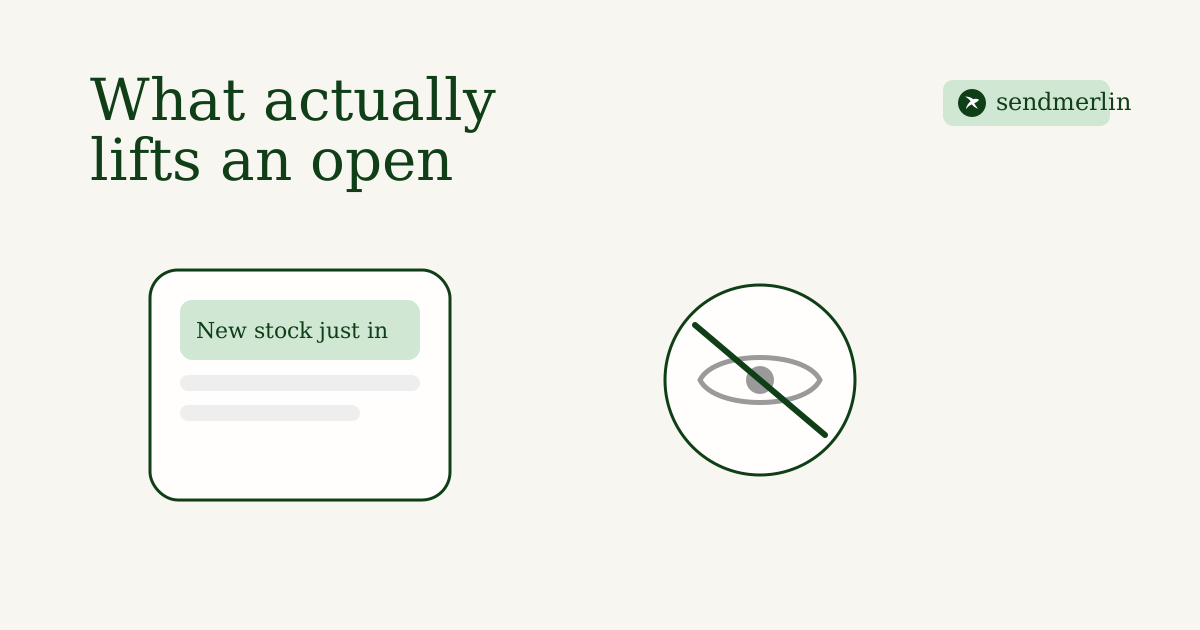
Since 2021, Apple's Mail Privacy Protection has let iPhone and Mac users hide whether they opened an email at all. Apple's own support documentation describes the feature as one that “hides your IP address so senders can't link it to your other online activity or determine your exact location,” and as part of that, it pre-loads the tracking pixel for every message at delivery, whether the person reads it or not. That registers as an open in your dashboard even on emails that sit unread for weeks.
This matters more every year because of how much of the inbox is now Apple. Litmus's May 2026 email client market share report, built from more than a billion tracked opens, found Apple accounts for 64.66% of them. Litmus has also tracked the share of those opens affected by Mail Privacy Protection specifically: 14.35% in October 2021, within weeks of launch, climbing past 50% by May 2022. For most small lists today, a majority of your 'opens' are not a reliable signal of anything.
Track what's still real
Clicks, replies, and purchases are not affected by pixel pre-fetching the same way: a click means someone actually touched a link. Use open rate to compare two subject lines sent to similar audiences in the same campaign (the inflation applies roughly evenly to both), but stop treating the absolute number as a score of how good your email marketing is.
Subject line habits that still move clicks
- Be specific, not clever. 'New stock just landed: 3 colors back' beats a vague teaser every time.
- Keep it to 30 to 50 characters so it doesn't get cut off in a phone's inbox preview.
- Front-load the useful part. Put the offer, the news, or the number first; assume only the first few words get read.
- Skip the spam triggers. ALL CAPS, multiple exclamation marks, and '100% free' still hurt inbox placement, which affects everyone before the subject line even gets a chance.
- Use the preheader on purpose. It's free extra space right next to the subject line; don't waste it on 'view in browser.'
Test on the metric you can trust
If you're A/B testing two subject lines, pick the winner by click rate, not open rate, whenever you have enough clicks to compare. SendMerlin's pre-send check flags subject lines that are too long or carry common spam phrasing before the campaign goes out, and the campaign report reads back the result in plain sentences instead of a dashboard full of numbers that mean less than they used to. One flat monthly price either way, so testing a second subject line costs nothing extra.
Frequently asked questions
Is open rate a useless metric now?
Not useless, but inflated on any audience with a lot of Apple Mail users: Litmus puts Apple's share of all tracked opens at 64.66% as of its May 2026 report, and most of those are pre-fetched by Mail Privacy Protection rather than genuinely read. Track clicks and conversions alongside open rate, not instead of it.
What subject line length actually works?
Aim for 30 to 50 characters so the full line survives truncation on a phone screen. Beyond that, specificity beats cleverness: say exactly what's inside rather than teasing it.